As buildings grow taller and more complex, elevator performance is no longer something you can afford to guess. Poor lift planning leads to congestion, wasted space, tenant frustration, and long-term operational inefficiencies. This is where elevator software becomes essential.
Modern elevator software allows developers, engineers, and consultants to model, simulate, and optimize vertical transportation systems before construction begins. Instead of relying on outdated formulas or assumptions, decision-makers can now design elevator systems based on real-world passenger behavior, traffic flow, and building usage patterns.
For high-rise, mixed-use, commercial, and residential developments, the right elevator software is not a luxury. It is a strategic advantage.
Elevator software is a digital simulation and analysis tool used to design, test, and optimize elevator systems within a building. Unlike static calculations, advanced elevator software simulates real passenger movement throughout the day, accounting for peak traffic, destination demand, and elevator dispatch logic.
This allows project teams to:
By using elevator software early in the design phase, costly revisions and operational bottlenecks can be avoided long before they become problems on-site.
For decades, elevator planning relied on simplified traffic formulas and rule-of-thumb assumptions. While useful in the past, these methods fall short in today’s complex buildings.
Elevator simulation software replaces static assumptions with dynamic modeling. It simulates thousands of passenger journeys, elevator movements, and dispatch decisions to show how a system performs under real conditions.
This shift enables:
Simulation-based elevator software provides clarity where traditional methods leave uncertainty.
The impact of elevator software goes far beyond lift design. It directly influences how a building functions every day.
By modeling peak and off-peak traffic scenarios, elevator software helps ensure efficient passenger flow, reducing congestion and long wait times.
Accurate simulations often reveal that fewer elevators are required than initially assumed. This frees up valuable floor space and improves rentable area.
Avoiding over-specification reduces equipment, energy usage, and long-term maintenance expenses without compromising service quality.
Reliable vertical transportation improves tenant experience, productivity, and overall building perception.
At the core of effective elevator software is elevator traffic analysis. Instead of generalized traffic assumptions, modern software evaluates:
This data-driven approach allows engineers and consultants to stress-test elevator systems before a single shaft is built. The result is a system designed for performance, not guesswork.
Not all buildings move people the same way. Elevator software is especially valuable for projects with complex traffic patterns, including:
Each building type introduces unique challenges. Elevator software adapts to these conditions, ensuring vertical transportation aligns with real-world usage.
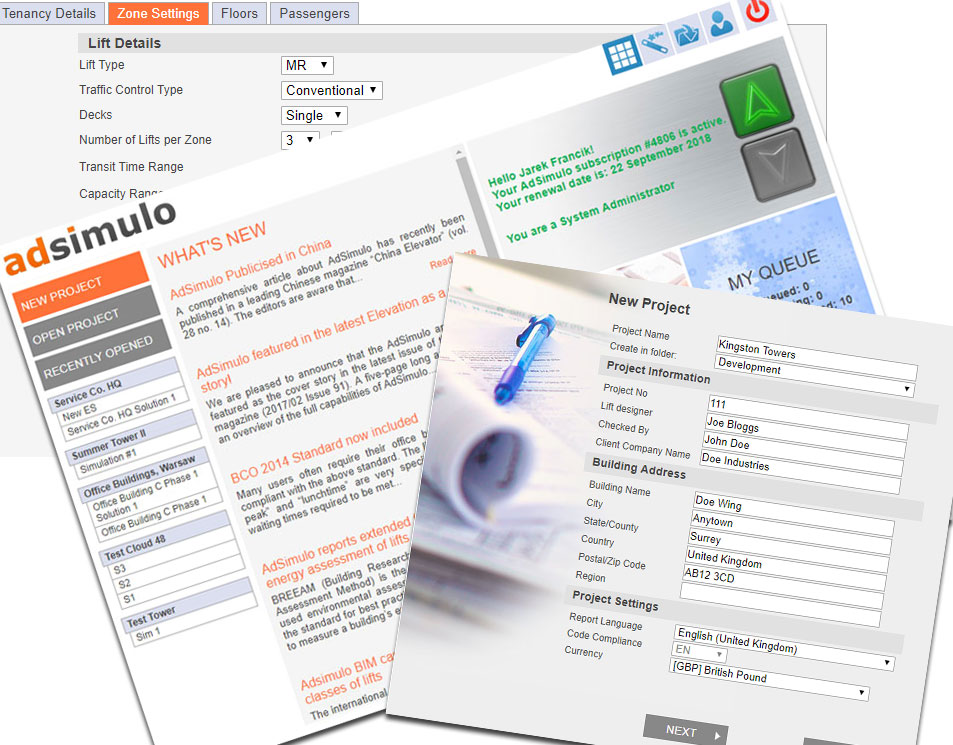
AdSimulo provides advanced elevator software built specifically for professional traffic simulation and performance analysis. Designed for engineers, consultants, and developers, the platform delivers precision without unnecessary complexity.
With AdSimulo, project teams can:
Rather than relying on assumptions, AdSimulo empowers teams to design vertical transportation systems that work as intended from day one.
Every elevator system decision impacts space efficiency, tenant experience, and long-term operating costs. Relying on assumptions or outdated calculations introduces unnecessary risk into high-value building projects.
AdSimulo’s elevator software enables you to simulate, validate, and optimize vertical transportation performance before construction begins. With data-driven traffic modeling and realistic passenger simulations, you gain confidence that your design will perform exactly as intended in the real world.
If you are planning a complex building, evaluating elevator capacity, or validating a design for approval, now is the time to move from estimation to evidence.
Explore how AdSimulo’s elevator software can support smarter design decisions and stronger project outcomes.


Elevator simulation software models passenger traffic, elevator movement, and system performance within a building. It helps engineers and developers evaluate waiting times, handling capacity, and design efficiency before construction begins. This reduces risk and improves decision-making during planning stages.
Elevator traffic simulation improves accuracy by replacing static formulas with dynamic, data-driven modeling. It simulates real passenger behavior throughout the day, allowing teams to identify congestion points, test different configurations, and optimize elevator performance based on realistic usage scenarios.
Elevator software is commonly used by vertical transportation consultants, building engineers, architects, and real estate developers. It supports informed decision-making during design, planning approvals, and performance validation for complex buildings.
Yes. By identifying overdesign early, elevator software often reduces the number of elevators or shaft space required. This leads to lower equipment costs, improved floor efficiency, and reduced long-term operational expenses.
Elevator software is particularly valuable for high-rise and mixed-use buildings where traffic patterns are complex. Simulation enables designers to test peak-demand scenarios and ensure elevator systems can handle real-world passenger flows efficiently.
We use cookies to improve your experience on our site. By using our site, you consent to cookies.
Manage your cookie preferences below:
Essential cookies enable basic functions and are necessary for the proper function of the website.
Google reCAPTCHA helps protect websites from spam and abuse by verifying user interactions through challenges.
Google Tag Manager simplifies the management of marketing tags on your website without code changes.
Statistics cookies collect information anonymously. This information helps us understand how visitors use our website.
SourceBuster is used by WooCommerce for order attribution based on user source.
Marketing cookies are used to follow visitors to websites. The intention is to show ads that are relevant and engaging to the individual user.
Facebook Pixel is a web analytics service that tracks and reports website traffic.
Service URL: www.facebook.com (opens in a new window)
You can find more information in our Cookie Policy and Privacy Notice.