A BREEAM assessor reviewing a lift specification is not checking whether the building has LED lighting in the car. They are checking for a specific, documented piece of evidence: a transport demand analysis that justifies the number and size of lifts specified, before any energy feature is even considered. This is what the credit actually requires, and why the traffic study behind a lift specification matters more to BREEAM than most energy-saving advice suggests.
What the credit actually covers
BREEAM’s energy-efficient transportation systems criterion applies to any lift, escalator, or moving walkway with a rated speed greater than 0.15 metres per second, which in practice means almost every passenger and goods lift in a commercial building. Platform lifts covered by the Machinery Directive are excluded, as are small service lifts and dumbwaiters despite sometimes exceeding that speed. Up to two credits are available for lift specification, with a third available where escalators or moving walkways are also being assessed in the same development.
One scope detail worth knowing if a project involves an existing building: lifts already in place generally fall outside this credit’s scope and do not need to be assessed, unless they are being renewed or undergo major refurbishment. A straightforward new installation is judged differently from a like-for-like replacement, which is judged differently again from a full modernisation, where the transport analysis has to reflect the building’s actual current occupancy rather than an assumed one. Where a building contains no lifts, escalators, or moving walks, the issue is filtered out of the assessment rather than scored as a fail, per BREEAM’s own knowledge base for this criterion.

What assessors look for first: the transport analysis
The first credit is not primarily about energy features at all. It requires an analysis of the transport demand and usage patterns for the building, used to determine the optimum number and size of lifts, escalators, or moving walks, and an estimate of the energy consumption of at least two lift or strategy options, with the lowest-consumption one specified. In other words, the assessor wants to see that the number and size of lifts was actually derived from the building’s demand, not assumed, and that the energy comparison was made between real, sized alternatives rather than asserted for a single choice.
This is precisely where a proper traffic analysis earns its place in the evidence file. The demand and usage pattern analysis this credit asks for is the same working population, traffic pattern, and handling capacity assessment that sizes a lift group for any other reason, documented rather than performed informally. A specification with no traffic study behind it has nothing to show an assessor for this half of the credit, regardless of how efficient the eventual equipment is.
What assessors look for second: the efficiency features
The second credit is more familiar territory, awarded for specifying at least three of four defined energy-efficient features: energy-efficient car and display lighting, meeting a minimum lumens-per-watt threshold or a low wattage ceiling typical of LED fittings; a standby condition that powers down the controller and ancillary equipment such as car lighting, displays, and ventilation after a period of idle time; variable-speed motors rather than fixed-speed drives; and, in some specifications, a regenerative drive that recovers braking energy back into the building.
Regenerative drives are worth a specific note, because BREEAM’s own guidance is more cautious about them than most marketing material suggests. The recommendation is that a regenerative drive should only be specified where the energy it saves exceeds the additional standby energy the drive itself consumes to support it, which is a genuine engineering trade-off rather than an automatic win, and is typically only favourable on high-travel, high-intensity installations.

Where the calculation itself has to follow a standard
Energy consumption for the comparison in the first credit is calculated in accordance with BS EN ISO 25745, the standard that defines how lift energy performance is measured and classified. An assessor is not looking for an informal estimate; they are looking for a calculation method they can trace back to a recognised standard, the same way a traffic figure is checked against CIBSE Guide D rather than taken on trust.
Energy upgrades for existing lifts
When the lifts are already installed, most of the efficiency features assessors look for can be added during a modernisation:
- Variable-frequency drives in place of motor-generator sets, which run constantly and waste energy as heat.
- Regenerative drives, which return braking energy to the building supply.
- LED car lighting and push buttons.
- Controllers with a standby mode, so idle cars switch off lighting and ventilation until the next call.
- Sub-metering, so the energy the lifts use is measured rather than estimated.
A modernisation traffic analysis then checks that the upgraded lifts still meet their service targets.
Putting the evidence file together
The credit rewards two separate pieces of work done properly and documented together: a transport analysis that justifies the lift group’s size against real demand, and an energy comparison across genuine alternatives calculated to a recognised standard. Neither one substitutes for the other, and an assessor reviewing a thin submission usually finds the transport analysis is the half that was skipped, not the efficiency features.
Who actually produces this evidence depends on how the project is structured. Where a lift consultant is already involved in specifying the installation, that evidence is normally theirs to produce as part of the specification work, not a separate exercise commissioned afterward. Where a project has a BREEAM target but no consultant driving the lift specification, the analysis still has to come from somewhere, and retrofitting it after equipment has effectively already been chosen is a weaker position to submit from than having it drive the specification in the first place.
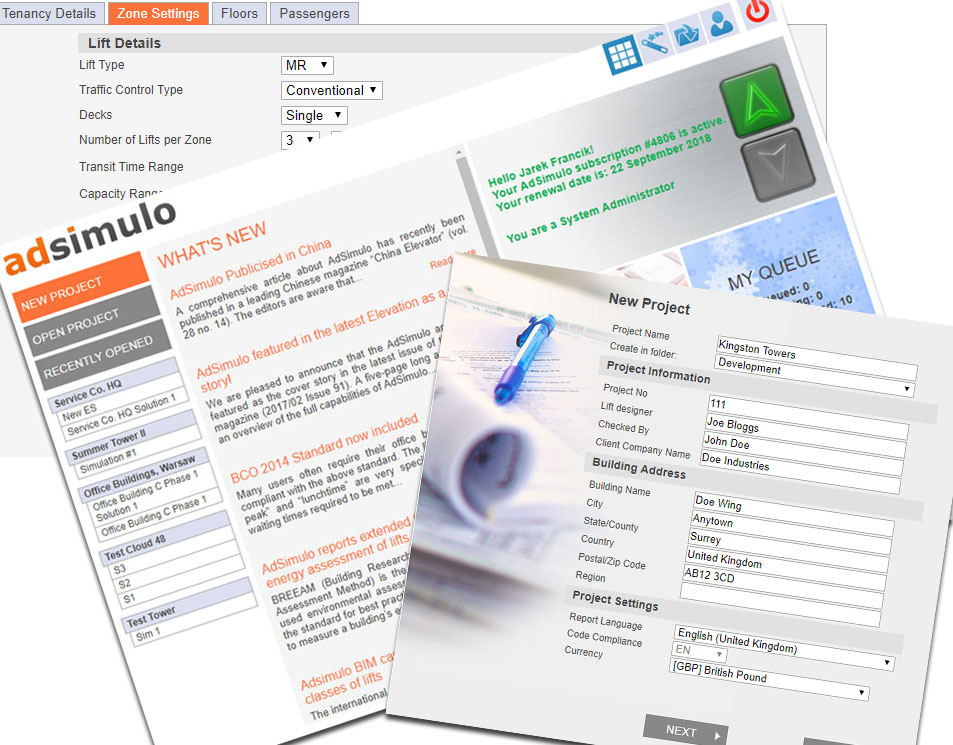
AdSimulo’s lift and elevator software produces exactly the transport demand and usage pattern analysis this credit’s first requirement asks for, sizing the group against the building’s actual population and traffic pattern rather than a rule of thumb, which is the documented starting point a BREEAM submission needs before the energy comparison and efficiency features are even in scope.